
This letter is 2,100 words long. Click here to download it as a .pdf
Before I begin, a big thank you to Lauren Hodge, Dev Basu, Selena Soo, Donna Stapleton, and Jayson Gaignard for their excellent feedback on early versions of this letter. If something is clear and helpful, credit them. If not, blame me.
--
2025 was a year of focus-inspired tradeoffs. It was a year of hard decisions, opting out, and reinvention.
I think the world is slowly figuring out what I learned this year: with virtually unlimited options, the only way forward is to build your own constraints.
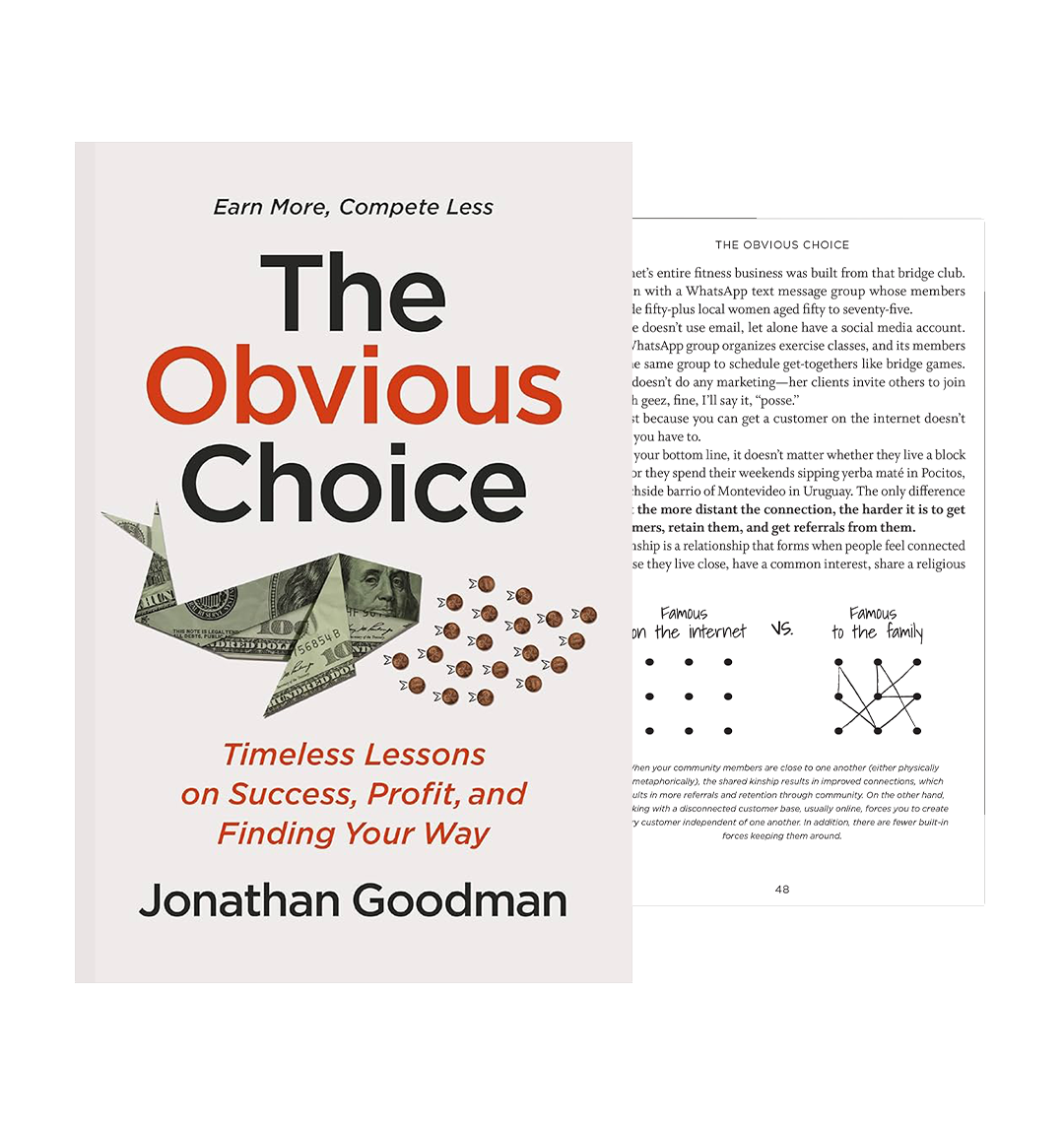
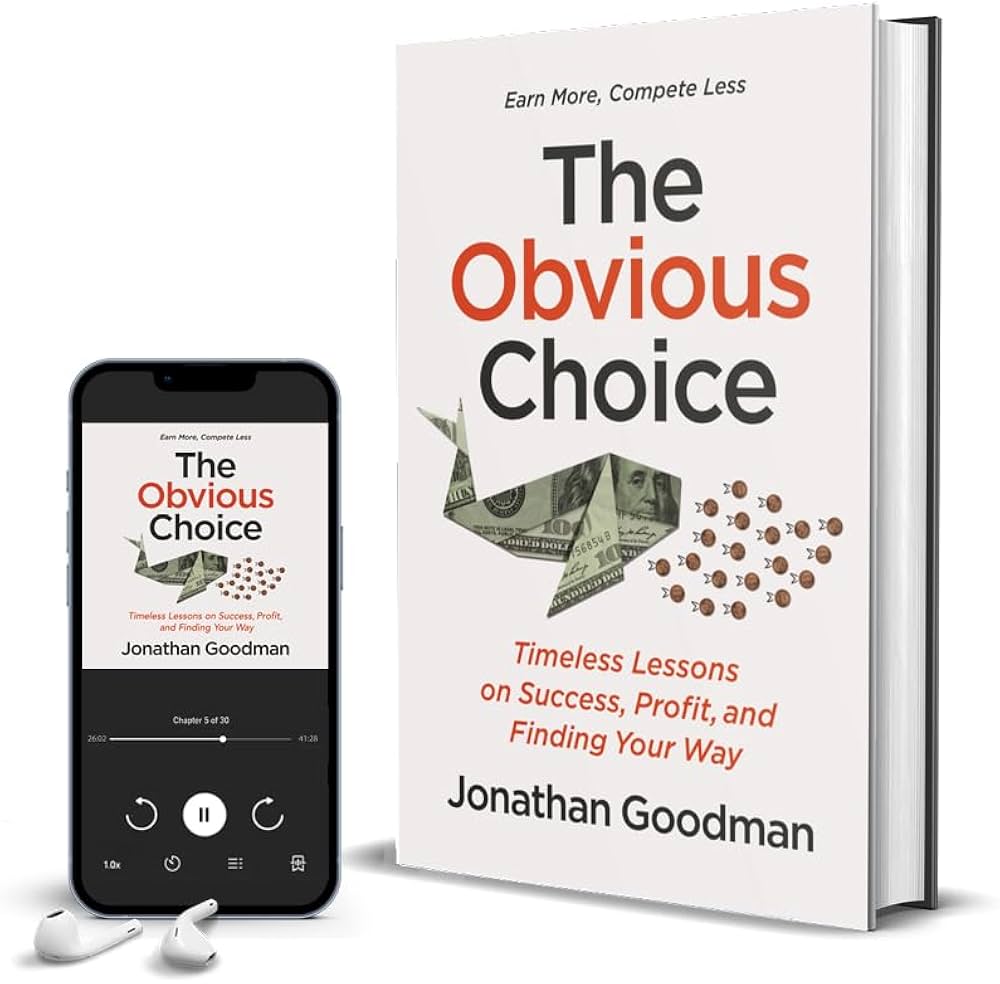
On the professional side, I shut down the Online Trainer Academy after 13 years and sold QuickCoach at a million+ dollar loss. Moving forward, our core focus is the Online Trainer Mentorship. In addition, I released The Obvious Choice, my first traditionally published book, and am looking forward to releasing Unhinged Habits on January 27, 2026.
Personally, Alison and I welcomed our third child and first daughter, Jasmine. This year marks our family’s 14th straight winter living abroad. We leave for Abu Dhabi, Indonesia, and Japan at the end of December. In addition, we renewed the mortgage on our house for the first time—more on personal finances later.
My goal for this (very busy, exhausting, and absolutely positively amazing) season of my life with young children is to put in a few focused hours of work each day. No more than two or three. To read lots, meet interesting people, and be able to disappear for a month at a time and have nobody care. Once I defined my lifestyle properties, writing emerged as the perfect fit. And I love doing it.
Focus is a state you exist in when you finally become confident in who you are. When you say “this is who I am. These are the people I want to be around. This is the work I’m best designed to do, dammit, and it’s all I’m doing.”
I've been the 'personal trainer guy' on the Internet for 15 years. That season of my life is over. Financial freedom let me go all-in on authorship, which meant shuttering and selling the businesses that built my reputation.
Having the best to yourself
A lifetime ago—I call it B.C., before Calvin—Alison and I set off on a 48-day road trip across Canada and the USA. We hiked in 16 National Parks and monuments. Walking in silence for hours surfaces truths hidden in regular life.
I noticed that when I was close to a tree, all I saw was the bark. But if I took the time to walk the path that overlooked the valley where the tree stood, an entire ecosystem emerged. A stream, maybe. Or another path.
We all have this feed. Everything on it is the same size, tricking us into assigning the same importance to an array of opportunities.
It’s taken me half of my life to realize I’ve learned to play the game right, but I wasn’t playing the right game. There is no greater tragedy than spending your whole life trying to get good at a game you weren’t supposed to play. To get good at something that isn’t good for you. To win the approval of people who don’t matter. Sucked into a system of comparison without real value. Too close to the tree, only seeing the bark, never seeing the other path, struggling to find peace because your life is split into too many pieces.
On that same trip, I learned how easy it is to have the best to myself.
Whenever we’d get to a park, there’d be a central parking lot with a paved pathway to the main attraction. A waterfall, cliff, whatever. Almost everybody would stop there, take pictures, and head back to their car. For the few of us willing to walk an extra 5 minutes on a dirt path, we’d have the place to ourselves. In business, it’s no different. Few are willing to walk further. Fewer still are willing to lead the way.
The fastest way to earn a seat at the table is to host the meal
Forging a new identity as an author has been difficult. Reputation is highly contextual, and I needed to rebuild mine in a new field. This past year, I co-hosted 34 meals with over 150 authors in five cities, invested 40 hours writing one blog post, and manually messaged it to 1,000 people. I’ve met my heroes. Many of them have become friends, some collaborators.
Build based on who you’re becoming, not who you’ve been
2025 was a planting season, full of networking. 2026 will be a harvest season, inward-focused, productive, and (hopefully) fruitful.
Seasons needn’t be long in order to be effective. Focus and intensity matter more than duration.
Fourteen years of escaping winter taught me to make a routine, let it serve my current aspirations, then break free of it.
Every year when I’d leave Toronto, I wiped my calendar clean. Then when returning home in the spring, I’d do the same. Us humans are terrible at subtracting. We add to our calendars, agree to commitments, and fill our homes with things we don’t need. If a season never ends, I will never stop adding. That’s a trap.
Every season needs an end because every end is a new beginning––an opportunity to start anew with a fresh slate based on who you are becoming, not who you used to be. Like a forest reborn after fire, new growth demands the death of what came before.
A job is what you do for money. Work is what you do for you.
I took a $1.4 million loss on a project in 2025. It was a SaaS tool I self-funded called QuickCoach that failed because of me.
My ego wanted to own a software company more than I actually wanted one. Reading about SaaS bored me. Contrast that with my boundless energy for writing. If I don’t have an unlimited appetite for consuming information about my work, it is not the work that I should be doing.
So why did I keep QuickCoach running for so long even though it was losing money each month with no vision for the future? Because of ego.
It showed up in how I introduced myself. I never know how to tell people what I do for a living. Am I a coach? An author? An entrepreneur? What’s most impressive? Craving external validation is a bad way to approach introducing myself. But it’s how I think. Telling people that I own a software company with tens of thousands of users made me feel important, even if it was losing money. Telling people I write books or that I own a mentorship company doesn’t have the same cachet. Ego is expensive.
Alas, SaaS joins membership sites and conferences in the bucket of good opportunities for others that I tried and failed at. I don’t regret QuickCoach. It helped me figure out another thing not to do.
My litmus test for the right kind of opportunity has three parts.
- What seems easy to me, yet hard for others?
- What do I have boundless energy for?
- What can I consume an unlimited amount of content about?
A job is what you do for money. Work is what you do for you. Once you've made enough money, your bank account becomes a bad scorecard. Going all-in on authorship is a terrible financial decision—I could make far more money elsewhere. But it's been a wonderful personal one.
Some thoughts on personal finances and capping downside risk
Alison and I bought our house in 2019 and refinanced our mortgage in 2020, locking in a fixed 1.89%. Dumb luck, timing, and circumstance contribute to wealth.
We still owe $1.2 million on our house. Rates have gone up. It’s time to renew our mortgage. We’d rather limit our upside potential to cap our downside risk and signed a 5-year variable contract at 3.77%. If the rate holds steady, we’ll pay it off slowly.
But there are two other scenarios we built a plan for:
-If the fixed rate dips below 3%, we will lock in for an additional 5 years.
-If the fixed rate rises above 5%, we will lock in for the remainder of our term, double up each payment, and pay down the maximum of 10% each year. This will significantly reduce the principal, offsetting the pain of the higher rate.
Our family’s investment portfolio has four pillars:
- Stocks
- Real estate
- Bitcoin
- My personal brand
Beyond investing, Alison and I established a spending philosophy optimizing for time with friends, family, and community. Last year, we bought her two brothers' share of the family cottage. We then had it renovated to better accommodate guests. For example, we added a third bedroom and bought a table that’s too big for the space, but can seat 16 people at once.
On the professional side, I instituted a $50,000 a year gifting budget. Most of it goes toward bulk book purchases from authors I want to support. Before I had the budget I would spend thousands on Meta ads but felt an odd sort of resistance buying a colleagues thing. Defaulting to generosity shifted my focus from financial capital to social capital. The relationships I've built by showing up and supporting colleagues has been a far better investment than paid ads.
The world is going mad. The wealth gap is widening. Widespread job disruption is coming full force. I’m scared. Every time in history that the gap between the rich and the poor has grown this wide, massive upheaval followed.
Changes to the fabric of society are coming in my lifetime, but I'm not smart enough to predict how or when.
There will be opportunities to get stinking rich—shorting the right stock, timing a crypto crash, making one perfect bet. I'm opting out of that game.
Instead, I'm hedging across four areas: our home + a few REITs, conventional investing with an advisor, Bitcoin, and my reputation. This limits my potential upside, but it protects me from ruinous loss and frees me from obsessing over news cycles, policy shifts, and economic prophesying. Maximizing returns isn’t worth losing sleep or time with my kids.
What Alison and I haven’t figured out yet is our philosophy towards personal gifting. Last year a number of people we care about asked for loans or monetary gifts to help them through hard times. I have no idea how to respond. On one hand, I want to help and we can. On the other hand, I can’t help but consider the second-order consequences of handouts. What I need to build in 2026 is a philosophy towards giving in situations like this. A series of rules for when we do it, how we do it, and how we respond when we don’t. If you have any insight, I’m all ears.
Settling is a good thing, actually
Desiring more used to drive me. More external praise. More money. More muscles. In 2025, that changed. The only 'more' I want now is time, space, and energy for writing. Not for the money it might bring or the respect I might gain, but because I can feel myself becoming more of the father, friend, grown-up son, and creator I want to be when I write. Writing forces a level of introspection that nothing else can.
We’ve now been in our home for six years. Our local community is great. I don’t have fitness goals anymore––just maintenance and injury prevention. Settling gets a bad rap. I’ve found it to be serene. Settling everywhere else is the only way to stay focused somewhere that matters.
What you can help me with
My next book, Unhinged Habits, is being released on January 27, 2026.
The book is about transformative growth through periods of intensity flanked by consistency. It explores work, abundance, and even adult friendship through this lens. If you were to combine Essentialism, Atomic Habits, and 4,000 Weeks, you’d get Unhinged Habits.
I’d love your help in two specific ways:
- If you have a newsletter that speaks about personal development, habits, minimalism, creator businesses, or fitness, I would love to contribute a short essay for your audience.
- I can arrange bulk discounts and shipping for preorders of 25, 50, or 100+ copies.
If you can help with either, reply and we’ll figure out next steps.
Wrapping Up
I turned 40 in 2025. Which feels crazy because I used to think 40-year-olds were old. I don’t feel old but I do feel like I’ve hit a rebirth.
More than anything, I’m grateful for another year––and for friends, family, community, and colleagues.
I’ll leave you with some wise words from John F. Kennedy: “The time to repair the roof is when the sun is shining.”
Thank you for reading, and I hope I get to write to you again next year.
-Jon